Most utility strikes don't happen because a tradesperson was reckless. They happen because someone made a reasonable-sounding assumption — that the plans were accurate enough, that the service was deep enough, that this particular spot was probably clear. The signs below are the situations where those assumptions are most likely to be wrong. If your job fits one or more of them, NDD isn't optional — it's the correct approach.
You're Digging Within 1 Metre of a Service Shown on DBYD Plans
The Safe Work Australia code of practice for excavation work specifies that non-mechanical methods should be used within 1 metre of any located underground service. This is the clearest and most widely applied standard in the industry. If your DBYD plans show a water main, gas line, electrical conduit, or telecom run within 1 metre of your proposed dig, NDD is the appropriate method — not a backhoe, not a trencher, not hand digging with a spade. The 1-metre zone exists because DBYD plans have a tolerance, and mechanical equipment doesn't. Potholing confirms exactly where the service is before your mechanical crew moves in.
Your Site Is in an Established Canberra Suburb with Older Infrastructure
Canberra's established suburbs — inner north and south, Belconnen, Tuggeranong, Woden Valley, and Queanbeyan's older residential precincts — were developed through the 1960s, 70s, and 80s. Infrastructure from that era was installed to the standards and with the documentation practices of its time. Services may be at non-standard depths due to soil movement over decades. Asset records may be incomplete, missing private infrastructure entirely, or based on original estimates rather than as-built measurements. In these areas, DBYD plans give you a starting point. NDD gives you ground truth.
You Can't Account for All the Services That Might Be Present
DBYD only returns plans from registered asset owners. Private conduit runs, owner-installed irrigation, sub-metered water connections, early-stage civil infrastructure on new estates, and services installed by previous property owners with no formal documentation simply don't appear. On any established residential property, on renovation sites, and on commercial properties with a history of works, the likelihood of encountering unregistered infrastructure is real. If you can't confirm with certainty that the area is clear beyond DBYD, NDD or potholing is the appropriate next step.
Your Project Involves Infill Development, Extensions, or Connections to Existing Services
Infill development — granny flats, rear extensions, pool installations, garage conversions — requires ground works on established properties that almost always have existing service connections. The original connections for water, gas, and electrical services run from the street to the existing structure, and their exact path through the yard is rarely documented. Before trenching for new connections, or before digging foundations for additions, NDD to trace and verify existing service runs is standard practice. Finding a service with a hydrovac costs a few hundred dollars. Finding it with a bobcat can cost significantly more — and that's before remediation.
Your Contract, Insurance, or Client Requires It
Government projects, commercial contracts, and institutional work in Canberra increasingly specify NDD as a condition of contract before any mechanical excavation near services. ACT government infrastructure projects, works near Icon Water assets or ActewAGL infrastructure, and jobs on hospital, school, or government precinct sites frequently mandate NDD as the standard of care. Your professional indemnity or public liability insurer may also have expectations around excavation near utilities that effectively require NDD compliance. If you're unsure what your contract or policy requires, checking before you dig is significantly cheaper than finding out after a strike.
When in Doubt, Pothole First
A single pothole to confirm service depth takes 30–45 minutes and costs a fraction of the call-out fee for an emergency gas response. If your job hits even one of the signs above, the time to call GreenVac is before you schedule the excavator — not after.
Organising NDD for Your Canberra Job
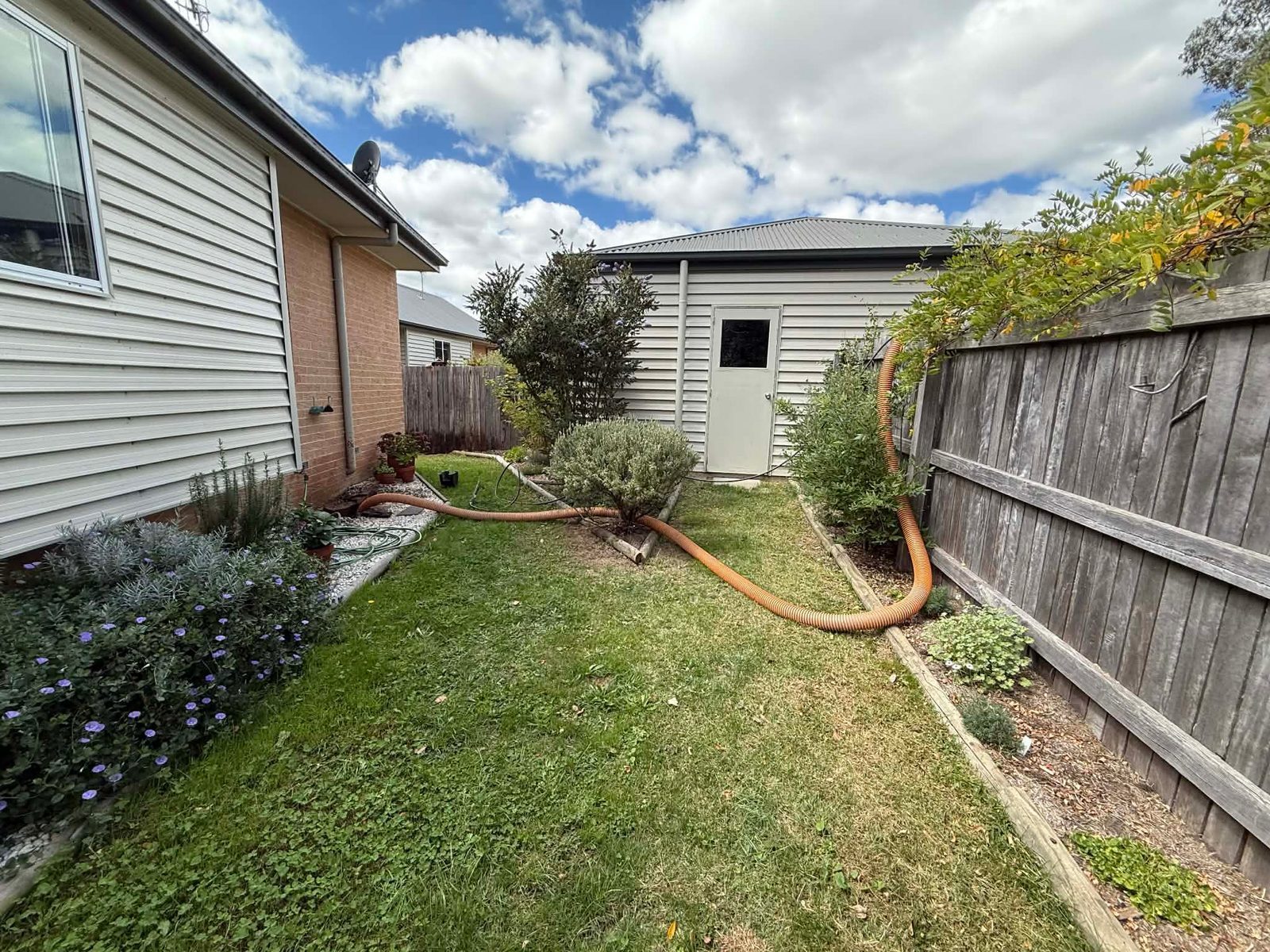
GreenVac's compact trailer-mounted rig operates across all of Canberra ACT, Queanbeyan, and Southern NSW. The rig fits through standard residential gates and operates without blocking streets — which means most residential NDD work in Canberra doesn't require traffic management or road occupation permits.
James Coleman takes calls directly. Tell him what you're digging, where, and what DBYD has returned. He'll advise on what's appropriate for your specific site and give you a straight answer on availability and cost — usually in a single conversation.
Call James Before You Dig
A quick conversation is all it takes to know whether NDD is appropriate for your job — and what it'll cost.