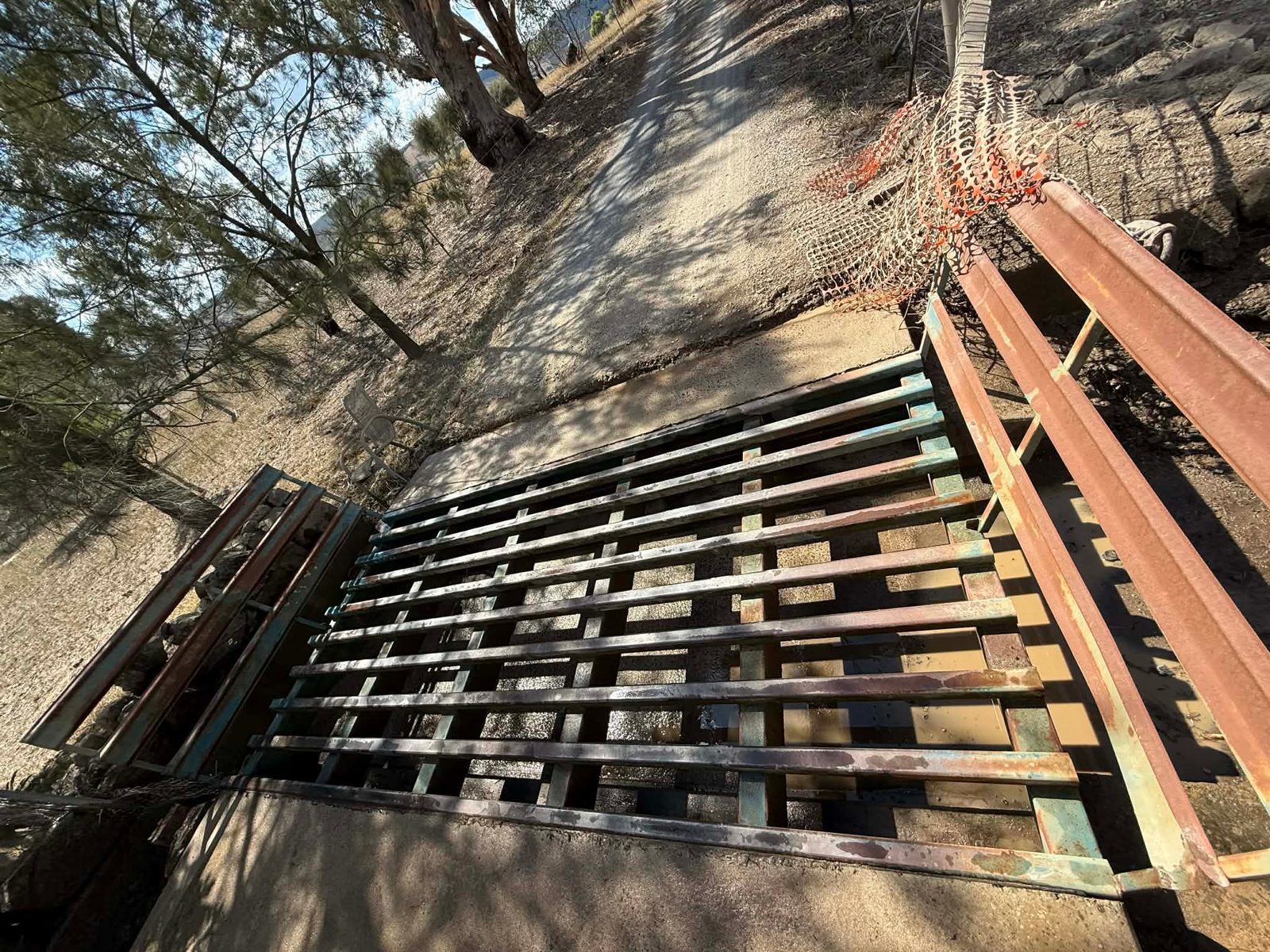
A cattle grid only works while there's a void under it for stock to baulk at. Once the pit underneath fills up, the grid stops being a barrier and starts being a trip hazard with bars over it. Out on Southern Tablelands properties, that's a job that quietly creeps up on people — and it's one the compact rig is well suited to.
What fills a grid up
It's rarely one thing. Over the years a grid pit collects washed-in silt and gravel off the track, leaf litter and organic matter, stock muck, and whatever runs off the surrounding ground in heavy rain. On a property entrance that takes a lot of traffic, the pit can pack out faster than you'd think. Left long enough, the grid sits on solid fill and does nothing.
Why we vacuum them out instead of digging them
Cattle grids are awkward to clean by hand. The bars are heavy, often rusted or set into the surround, and the muck underneath is wet and dense. Lifting the whole grid to dig it out is a big job and risks damaging the frame or the surround.
A hydrovac sucks the sludge and debris straight out from around and under the bars, so in a lot of cases the grid doesn't have to come out at all. The water loosens packed material and the vacuum lifts it into the tank — cleaner and less disruptive than hand-digging, and gentler on the grid and its surround than levering it apart.
Local, not driving up from the coast or the city
GreenVac is based in Braidwood, so for properties across the district — and out through the Araluen Valley, Majors Creek and the wider Southern Tablelands — you're not waiting on someone to schedule a run from Canberra or the coast. The trailer rig gets down farm tracks and property entrances a full-size truck would struggle with.
What a typical cleanout looks like
Jobs range from a single entrance grid on a lifestyle block to several grids along a working station's internal tracks. The shape of it is usually:
- Have a look at how full the grid is and how the rig can get to it
- Set up the trailer rig at the grid — no need for big truck access
- Vacuum out the sludge, silt and debris from the chamber under the bars
- Clear it back to a working void so the grid does its job again
How long it takes comes down to how packed the grid is, how many you've got, and the access. Heavy, set-hard sludge is slower than loose silt — I'll give you a realistic read once I know what we're dealing with.
Who calls us for this
Mostly rural property owners and managers, but also contractors and councils looking after rural road grids. If you've got a grid that's stopped holding stock, or a few that haven't been touched in a long time, it's worth sorting before someone's vehicle finds the soft spot.
Get It Sorted Before Stock Walk Over It
Tell James how many grids and roughly where the property is. He's local to Braidwood and will get back to you when he can with a realistic plan and price.