What Is Dial Before You Dig?
Dial Before You Dig (DBYD) is a national referral service that connects people planning ground works with the owners of underground assets in the area. Before you dig, drill, bore, or blast, you submit a request through the DBYD website with your site address and dig area. DBYD then forwards the request to relevant asset owners — utility companies, telecommunications providers, government agencies — who respond with plans showing the approximate location of their infrastructure.
The service is free. It's also a legal requirement under Australian WHS regulations and the relevant code of practice for excavation work. If you break ground without lodging a DBYD enquiry first, you're operating outside your duty of care — and if you strike a service, you'll have limited grounds to dispute liability.
How to Lodge a DBYD Request in the ACT
The process is straightforward and usually takes under 10 minutes:
- Go to www.1100.com.au (the national DBYD portal)
- Create a free account or log in
- Enter the work site address and draw the proposed dig area on the map
- Select the type of work and proposed start date
- Submit the request — allow at least 2–3 business days for responses
In the ACT, relevant asset owners typically include ActewAGL (gas and electricity), Icon Water (water and sewer), Telstra, NBN Co, and the ACT Government (roads, stormwater, and public infrastructure). Each responds separately with their own plans and conditions. You must review all responses before work begins.
Canberra Tip
DBYD response times in the ACT are generally 2–3 business days. For urgent jobs, lodging your enquiry as early as possible — ideally at the same time as the initial quote — avoids delays once the job is approved.
What DBYD Plans Tell You — and What They Don't
This is the part that catches trades out. DBYD plans show the approximate position of services as recorded by asset owners in their databases. They are drawn from as-built records, which range in accuracy from highly precise to decades out of date.
What DBYD plans typically don't tell you:
- Exact depth. Plans rarely specify depth, and even when they do, it's a recorded depth — not a confirmed current depth. Ground movement, previous disturbance, and poorly documented works can shift services significantly from what's on record.
- Exact horizontal position. Service corridors shown on plans can have tolerances of 500mm or more. In Canberra's established suburbs, that tolerance can place a service squarely within a proposed dig zone that appears clear on paper.
- Privately installed infrastructure. Owner-installed conduits, drainage connections, irrigation systems, secondary meter connections, and private communications infrastructure are typically not lodged with DBYD. They simply don't appear in the plans.
- Services from non-registered owners. Not all asset owners participate in DBYD. Some smaller utilities, private networks, and legacy government infrastructure may return no plans — not because there are no services, but because the owner hasn't registered.
The Gap Between Plans and Reality in Canberra
This gap is significant across Canberra, particularly in established suburbs. The ACT's utility network was built out progressively from the 1920s through the 1980s, and asset records from that era reflect the documentation standards of their time — not the precision required for safe modern excavation. In inner north and south Canberra, in established Belconnen and Tuggeranong suburbs, and in mixed commercial/residential areas like Phillip and Dickson, DBYD plans frequently describe a service corridor rather than a precise location.
This doesn't mean DBYD is useless — it's essential. It tells you what's likely to be in the area and which asset owners to work within. But it cannot replace physical verification of service position and depth when ground works will take place within the identified corridors.
When Potholing Is the Next Step After DBYD
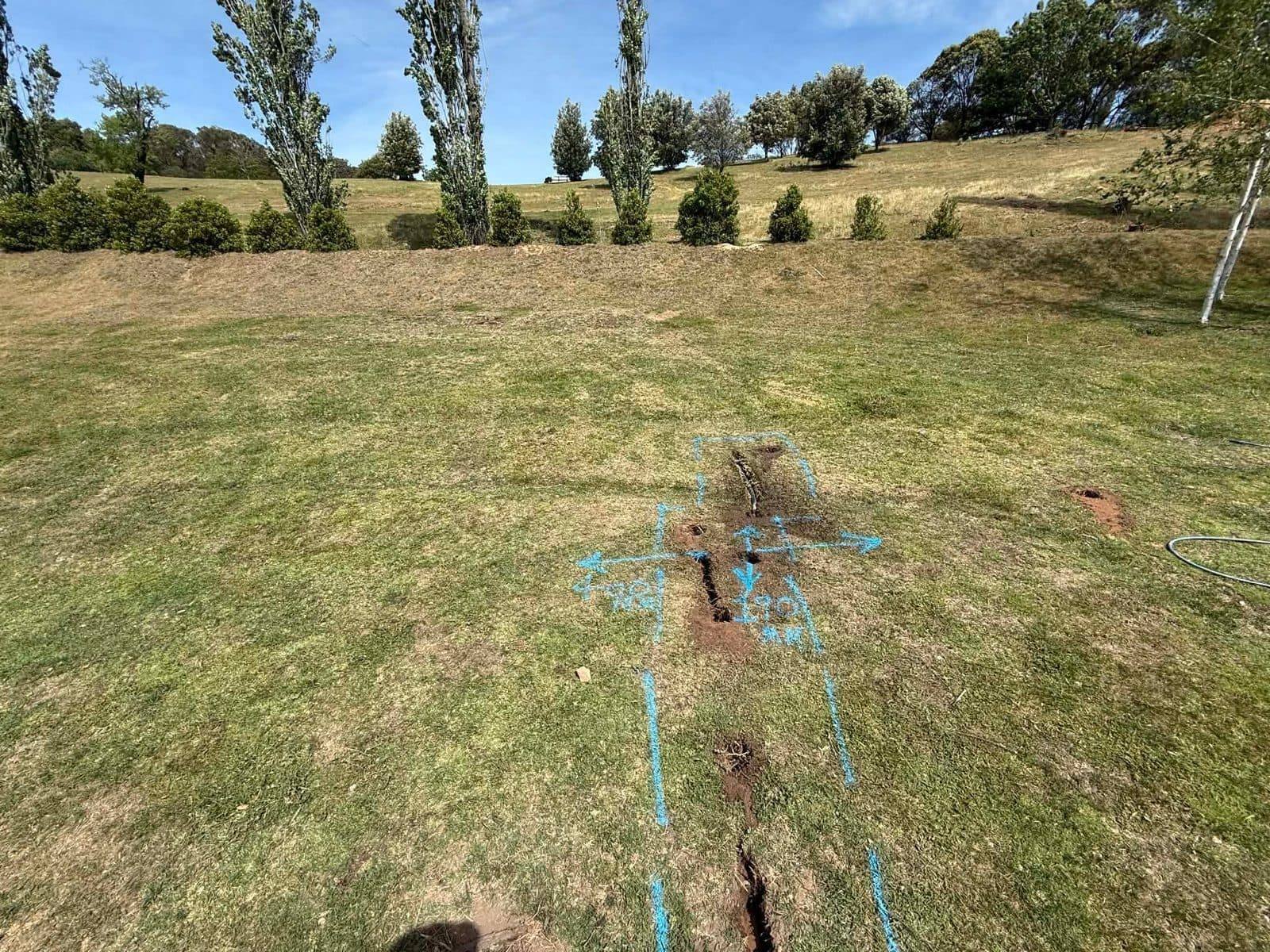
Potholing — using hydrovac to create a small, precise hole to physically expose and visually confirm service location — is the standard method for bridging the gap between DBYD plans and ground truth. It should be used whenever:
- DBYD plans show services within or adjacent to the proposed dig zone
- Proposed mechanical excavation will occur within 1 metre of a indicated service
- The site involves aged infrastructure or areas with a history of undocumented works
- Project insurance or contract conditions require confirmed service locations
- You're working in an established Canberra suburb where service records may be incomplete
The process is fast. A single pothole to confirm depth and lateral position typically takes 30–45 minutes. That's a fraction of the time lost managing a utility strike — and nothing compared to the liability exposure that comes with it.
GreenVac's Role in the DBYD Process
GreenVac works alongside Canberra trades at the post-DBYD stage. Once you have your plans and know where services are indicated, James can mobilise the compact trailer rig to pothole the specific locations that need physical verification before your mechanical crew moves in.
The compact rig reaches sites that full-size trucks can't — including tight residential backyards, narrow side passages, and heritage streetscapes where you can't afford to occupy a traffic lane. James can discuss your DBYD plans and proposed dig area over the phone and advise on what potholing is appropriate for your specific site.
Got Your DBYD Plans?
Call James to discuss your site and confirm what potholing you need before your crew starts digging.