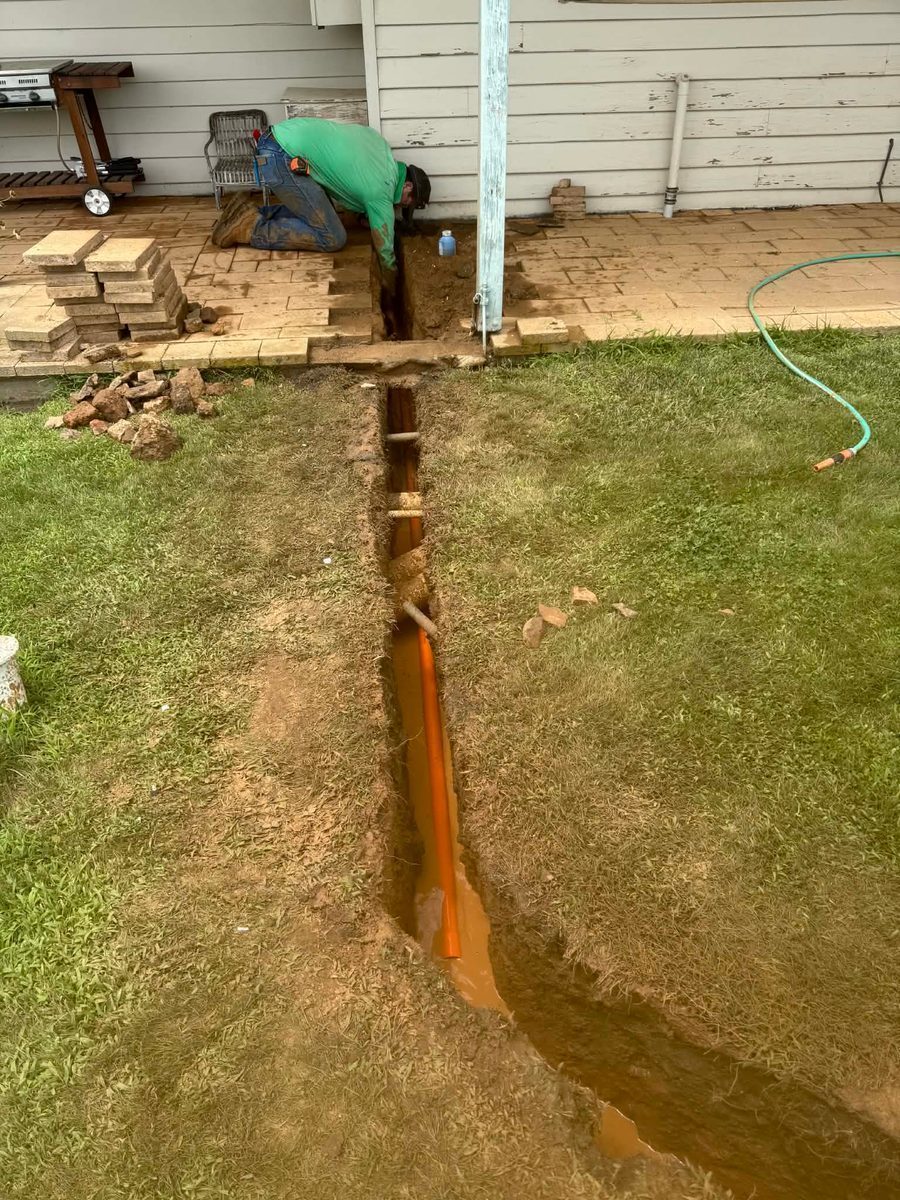
Two Ways to Move Soil — One Fundamental Difference
Mechanical excavation uses a physical tool — a backhoe bucket, trencher chain, or auger bit — to cut and remove soil by force. It's fast, well-understood, and appropriate for many excavation tasks. But when that force encounters something rigid that isn't soil — a gas main, an electrical conduit, a water pipe — the result can be immediate and severe.
Hydro excavation (hydrovac) uses high-pressure water to break up soil, which is then removed by vacuum into a sealed debris tank. The water cuts through soil efficiently but won't damage man-made infrastructure — when the pressure lance contacts a pipe or cable, it washes around it rather than shearing through it. Services are exposed cleanly and completely intact.
That single difference — the inability of water to shear through rigid infrastructure — is why hydrovac has become the default method near underground utilities across the Australian construction industry.
When Mechanical Excavation Is Appropriate
Mechanical excavation is the right choice when the dig zone is confirmed clear of underground services and the scale of works makes hydrovac impractical or uneconomical:
- Large-volume earthworks in greenfield areas where no underground services are present
- Foundation excavation on new builds where service connections haven't yet been installed
- Bulk material removal after NDD has exposed and cleared the service zone
- Rural land clearing and earthmoving on properties without buried infrastructure
Even in these scenarios, the boundary between "clear" and "possibly not clear" should be treated carefully. Any area where underground services are plausible — based on DBYD plans, site history, or proximity to existing structures — warrants NDD or potholing before mechanical equipment moves in.
When Hydrovac Is the Right Call
Hydrovac should be used any time excavation occurs near known, suspected, or possibly present underground services. In practice, this covers the majority of trade work in established urban and suburban areas:
- Any dig within 1 metre of a service indicated on DBYD plans
- Pre-excavation potholing to confirm service depth before trenching or boring
- Service meter and valve exposure for maintenance or connection works
- Trenching for new water, gas, electrical, or data lines near existing infrastructure
- Leak detection access — exposing pipe around a suspected leak point
- Foundation works on existing buildings where service connections exist
- Any site in an established suburb where service records may be incomplete
The 1-Metre Rule
The Safe Work Australia code of practice for excavation work specifies that non-mechanical excavation methods should be used within 1 metre of any located underground service. This is a widely applied industry standard, and mechanical excavation within this zone is difficult to justify from a WHS compliance perspective.
The Side-by-Side Comparison
| Factor | Mechanical Excavation | Hydro Excavation |
|---|---|---|
| Risk to underground services | High — physical contact can shear, crush, or cut services | Negligible — water washes around infrastructure |
| Speed for large volumes | Faster for bulk earthmoving | Slower per m³, but faster for precise service exposure |
| Precision | Limited — bucket width determines minimum cut | High — expose exactly what's needed, stop when you see it |
| WHS compliance near utilities | Non-compliant within 1m of services | Fully compliant — the recommended method |
| Access requirements | Requires excavator access — often needs road occupation | Compact trailer fits through gates, no road closure needed |
| Surface disruption | Significant — wide cut, spoil spread | Minimal — spoil vacuumed into sealed tank |
| Liability if service struck | Contractor bears full liability | Negligible risk of strike — liability effectively eliminated |
The Real Cost Comparison
Hydrovac costs more per hour than mechanical excavation. This is a straightforward fact — and it's also largely irrelevant once you account for the risk differential.
A single gas main strike in a Canberra residential street can produce costs in excess of $80,000–$150,000 — emergency response, pipeline repair, reinstatement, traffic management, third-party property damage, and potential WHS enforcement action. An electrical cable strike carries electrocution risk, immediate project shutdown, and similar costs. An NBN cut in an established suburb can disrupt an entire street precinct and result in significant third-party claims.
GreenVac's potholing service typically costs a few hundred dollars. That's the cost comparison that matters: not hydrovac vs mechanical per hour, but hydrovac vs the probability-weighted cost of a utility strike.
How GreenVac Fits Into Your Project Workflow
The typical workflow that GreenVac supports is: DBYD enquiry → GreenVac potholing to confirm service positions → mechanical excavation proceeds with confidence in the cleared zone. This approach is standard practice for experienced trades across Canberra and the ACT.
For jobs where the entire excavation zone requires hydrovac — tight sites, service-dense areas, or jobs where mechanical access isn't practical — GreenVac provides the full excavation using the compact trailer rig. The same approach, scaled to the job size.
James Coleman can be reached directly on 0408 362 590. He'll discuss your site, your DBYD plans, and what level of NDD is appropriate for your specific job — before you need to make any commitment.
Call James for a Straight Answer
Tell him what you're digging, where, and what DBYD has come back with. He'll tell you what level of NDD makes sense for your job.