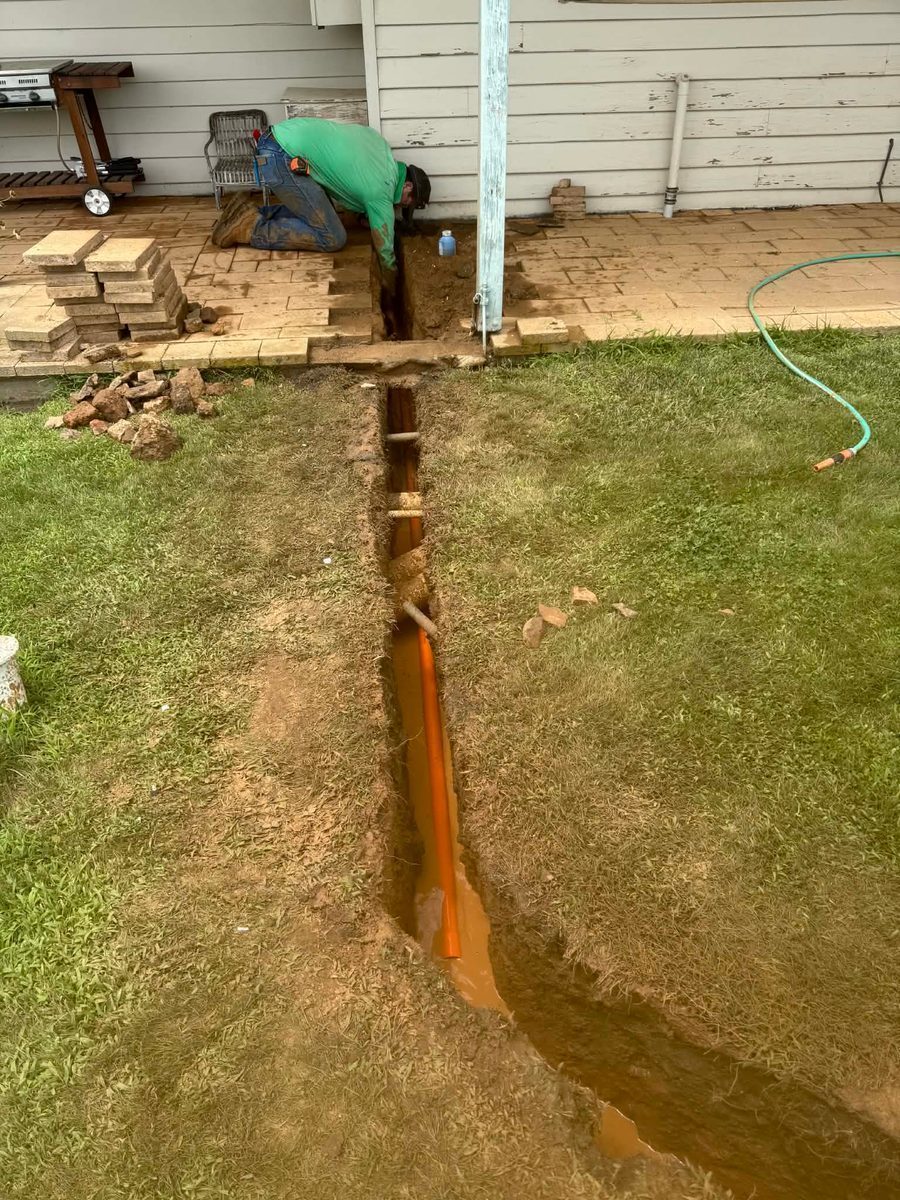
A good portion of the work I get around Canberra is the same shape: someone needs to find a water meter, a valve, or a service connection that's buried in ground that's been compacted hard over years — and they need it exposed without anything getting damaged in the process. It's a job that looks simple until you put a mechanical bucket near it.
Why compacted ground is the awkward part
Plenty of Canberra's established suburbs sit on heavy clay, and a lot of service pits get backfilled and compacted over decades of foot traffic, driveways, and landscaping. By the time someone needs to get back down to a meter or a connection, the ground around it has set hard. Two things make that risky to dig by hand or machine: the service is often right where you're swinging, and the harder you have to work the soil, the easier it is to slip and put a tool through a pipe or a conduit.
That's the moment a quick job turns into a repair, a call to the asset owner, and a day you didn't budget for.
Why pressurised water gets through where a bucket shouldn't
Hydrovac uses a focused jet of water to break up the soil and a vacuum to lift the spoil straight into the tank. The water cuts compacted clay and fill, but it doesn't cut through pipe, conduit, cable, or a meter body the way a steel edge does. So you can work right down onto the service and expose it cleanly. On harder ground the dig is slower — there's no pretending otherwise — but the method still suits it, because the trade-off is control. You're loosening soil, not levering against it.
The honest version
Compacted clay takes longer than soft, sandy ground — sometimes noticeably longer. I'd rather tell you that up front than surprise you on the invoice. If your site has a lot of rock or a big volume to move, I'll say so and point you to the right tool, even if that's not me.
What a meter or service exposure job actually looks like
On a typical Canberra job it runs like this:
- We start from what's known — your DBYD plans, surface marks, or the rough location you've got.
- The compact trailer rig sets up on the verge or in the yard. It doesn't need a traffic lane or a big footprint, so most residential sites are no drama.
- We work down through the compacted layer with water and vacuum until the meter, valve, or service is exposed and you can see exactly what you're dealing with — position, depth, and condition.
- You confirm what you need, and your plumber or crew picks up from a clean, open hole instead of guessing.
Where this comes up most
The jobs that land in this category around Canberra and Queanbeyan are usually:
- Water meter pits that need locating before a connection, upgrade, or meter swap
- Valve and stop-tap boxes buried under landscaping or compacted fill
- Service connections that have to be exposed before a renovation or new build ties in
- Suspected leaks where a plumber needs the pipe exposed cleanly to inspect it
It's plumbers, builders, and civil crews who call most — anyone who needs a service in the ground confirmed before they commit a machine to it.
The point of doing it this way
Exposing a service with water instead of steel is careful, methodical work. It respects the infrastructure that's already in the ground, and it gives the next trade something solid to work from. In compacted Canberra soils, that's usually worth the bit of extra time it takes.
Talk Through Your Site
Tell James what you're trying to expose and where. He'll get back to you when he can and give you a straight answer on whether hydrovac is the right call.